
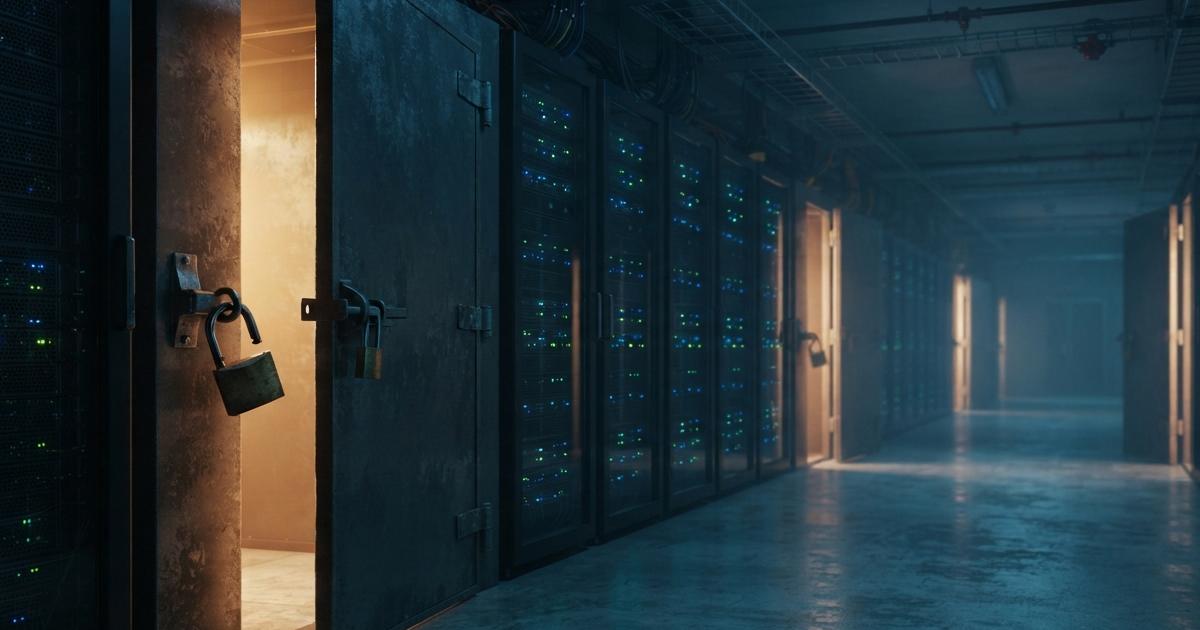

WordPress powers a significant portion of the internet, and on the surface, that sounds impressive. But dig just a little deeper and you will find that the very thing most people celebrate about WordPress — its massive ecosystem of third-party plugins — is one of the most serious threats to your website's security, stability, and long-term reliability. If you have ever been told that plugins are what make WordPress so powerful, nobody finished that sentence. The full version is that plugins are what make WordPress so powerful and so dangerous at the same time.
What Plugins Actually Are — And Why That Should Concern You
A plugin is essentially a piece of software written by a third party — someone completely unaffiliated with WordPress, unaffiliated with your developer, and in many cases unaffiliated with any professional standards or accountability. When you install a plugin on your WordPress site, you are granting that piece of code direct access to your website's database, your files, your admin panel, and in some cases your users' personal information.
The WordPress plugin directory contains tens of thousands of plugins. Some of them are written by reputable development teams with dedicated support staff. But many of them are written by individual developers working in their spare time, students learning to code, or companies that no longer exist. And here is the part that most people never think about:
- You have no way of knowing the quality of the code inside a plugin before you install it
- You cannot verify who actually wrote it or what their intentions were
- You cannot guarantee it will be updated when WordPress releases a new version
- You have no legal recourse if it breaks your site or exposes your data
- Free plugins have zero obligation to maintain compatibility or fix vulnerabilities
- Even paid plugins can be abandoned without notice
Every single plugin you add to your WordPress website is a variable you did not write and cannot fully control. And in web development, uncontrolled variables are where disasters are born.
The Real Security Risk Behind Third-Party Plugins
Security researchers consistently identify WordPress plugins as one of the leading causes of website breaches and compromises. This is not a fringe opinion — it is a documented, repeated reality across years of cybersecurity reporting. When hackers target WordPress sites, they are often not trying to break through WordPress itself. They are looking for the poorly coded plugin sitting quietly in your dashboard that nobody has updated in eight months.
Outdated Plugins Are Open Invitations
Every line of code in a plugin is a potential vulnerability. When a security flaw is discovered — and they are discovered regularly — the plugin developer has to release an update to patch it. If that developer is slow to respond, has abandoned the project, or simply does not prioritize security, that vulnerability sits open on your website waiting to be exploited. And unlike a door you forget to lock, you usually have no idea the door is even there.
Website owners are often managing dozens of plugins at once. A contact form plugin. A gallery plugin. An SEO plugin. A caching plugin. A social media plugin. A payment plugin. Each one of these represents a different codebase, a different author, a different update schedule, and a different risk profile. Keeping all of them current and compatible is a part-time job most business owners did not sign up for.
Plugin Conflicts Can Bring Your Entire Site Down
Beyond security, there is the matter of compatibility. Plugins are written independently of each other. When two plugins attempt to do overlapping things — modify the same database tables, hook into the same WordPress functions, load conflicting JavaScript files — the result can range from minor display glitches all the way to a completely broken website. A white screen of death. A database error. A checkout page that no longer works. These are not theoretical scenarios. They happen constantly on WordPress sites, often triggered by something as routine as a plugin update.
When your site breaks because two plugins cannot coexist, you are now at the mercy of two separate third-party developers who have never spoken to each other and have no obligation to resolve your issue. You might open a support ticket with one and be told the problem is the other. You might be told that support does not cover your specific combination of plugins. You might be told nothing at all because the developer stopped checking their inbox in 2022.
Why This Problem Is Structural, Not Fixable With Better Choices
Some people respond to these concerns by suggesting you simply choose better plugins — read the reviews, check the update history, stick to plugins with large user bases. This advice is not wrong, but it fundamentally misses the point. The problem is not that some plugins are bad and some are good. The problem is that the plugin model itself introduces a category of risk that does not exist in a custom-built website.
You Are Trusting Strangers With Your Business
When your website is built on a custom platform by a developer who writes every line of code themselves, you know exactly what is running on your site. You can ask your developer about any part of it. You can have it audited. You can have it updated. You have a single point of accountability. With WordPress plugins, you are trusting a collection of strangers — some professional, some not — with the infrastructure your business depends on.
Growth Makes It Worse, Not Better
Here is the irony of WordPress plugin dependency: the more your business grows, the more functionality you want your website to have, and the more plugins you install to achieve it. What starts as a modest site with a handful of plugins becomes a tangled ecosystem of interdependencies that grows more fragile with every addition. The more successful you become, the more your website depends on code you did not write, do not control, and cannot fully understand.
A site with twenty active plugins is not twice as risky as a site with ten. It is exponentially more risky because every additional plugin multiplies the number of potential conflict points and security vectors. This is a system that compounds its own problems over time.
What a Safer Alternative Looks Like
The alternative to plugin dependency is intentional, custom development. When a developer builds a website and writes the functionality directly into the codebase — rather than stitching together third-party modules — the result is a leaner, more secure, more stable website. Every feature that exists on the site exists because a real developer wrote it, understands it, and can maintain it.
This is not about being anti-technology or dismissing the value of efficiency. It is about understanding that convenience in website building often comes at a cost that does not show up until something goes wrong. And with WordPress plugins, something eventually goes wrong. The question is only when and how badly.
If your website is the foundation of your business — if customers find you through it, contact you through it, buy from you through it — then that foundation deserves to be built on something more solid than a collection of code written by people who have no stake in your success. You deserve a website where every piece of it was built deliberately, where there is someone accountable for how it all works, and where you are not one abandoned plugin away from a crisis.
Understanding the risk is the first step. What you do with that understanding is where the real decisions begin.
